Good Life Facilitation
Practical Wisdom for Gathering with the Spirit of Joy
Culturing containers for community: five weeks, five books, for leaders, teachers, coaches, facilitators, and anyone who wants to be more genuinely helpful in their relationships.
“All of this inner work is necessary and fulfilling in lots of ways, but it doesn’t mean anything unless we take it back out into the world in some shape or form.”Paul S., World Philosophy, Fall 2026
From past circles
“I’m grateful for the gentle leadership and the guidance that brings focus and brings the rhythm of writing and journaling back into my life.”
“I learned I can create this kind of a community in my own life, with intention: give compassionate space to everyone to dig deep.”
“This course helped me clarify what matters, helped me move through the challenges I have with my team.”
“You were all so present and aware, and the feedback and the empathy that you all shared was super meaningful to me.”
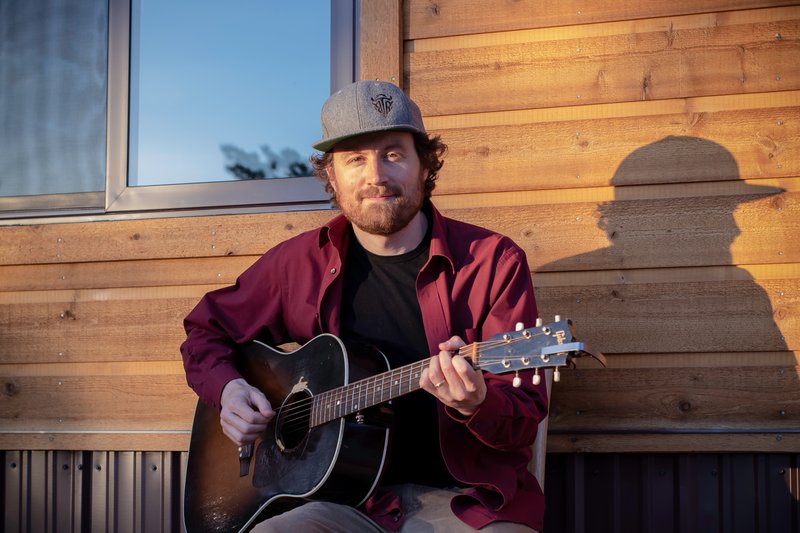
Your facilitator
Sean Waters has taught writing at Colorado State University for 17 years and holds master’s degrees in Philosophy and English Education. He founded the Wisdom Workshop in 2021 and has led more than 1,500 hours of small-group facilitation with 115+ participants in 9 countries.
“Sean has a gift for warmth, genuineness, and unconditional positive regard.”
What you’ll leave with
- A facilitation practice you’ve tested. Each week you write a short process letter on how you’re holding your own groups, toward an end-of-2026 goal.
- A written commitment to the community you’re building, want to build, or want to contribute to.
- A finals presentation to a circle that has watched you grow, followed by an exit conversation.
Our map is the three Taoist treasures (verse 67): simplicity → generosity, deep love → courage, equality → leadership.
The five weeks
We move through the Seven Ps of Good Life Writing, held in four relationships: Self, Life, Others, and World. That’s SLOW facilitation.
-
Nov 11Self
Presence + Purpose
Carl Rogers, A Way of Being
Besides the technical skills, what are the human skills most important for culturing community?
The three facilitative conditions of the helping relationship: unconditional positive regard, genuineness, and empathic listening. How do they apply to the communities we culture, the containers we tend, and the conversations we host? Your first process letter: your purpose, and the community you’re building.
-
Nov 18Life
Play
Selections from John Heider, The Tao of Leadership
How might you guard and keep the treasures of simplicity, deep love, and equality?
An encounter-group leader’s reading of the Tao Te Ching: effortless action and non-violence. We center the three treasures of verse 67.
-
Nov 24/25
No meeting for Thanksgiving. Catch up, and dance your thanks.
-
Dec 2Life
Projects
Marilyn M. Taylor, Emergent Learning for Wisdom
How do we build the garden wall, serve good snacks, and gather good people to cultivate emergent learning for wisdom?
The psychology of learning, the phases of emergent learning, and how leadership nurtures cultures where deep learning happens.
-
Dec 9Others
Personhood
Reinhard Stelter, A Guide to Third Generation Coaching (PDF provided), with selections from Victor Turner, The Ritual Process
Who are the people you want to learn with? What is third-generation coaching, and why does it matter now?
Symmetry between I–Thou dialogue partners, and narrative, collaborative meaning-making: the foundation for one-on-ones and participatory facilitation. We’ll also draw comparisons to Turner’s work on ritual and communitas.
-
Dec 16World
Process + Perspective
Selections from Irvin Yalom & Molyn Leszcz, The Theory and Practice of Group Psychotherapy
What are the healing factors in any group? How do we culture healing environments that reach beyond the group itself?
Yalom first identified the eleven therapeutic factors of groups. Prepare your finals presentation and exit conversation.
-
Dec 16–18Finals
Closing celebration
What does it look like to dance your thanks?
We celebrate how each of us has been culturing our own communities. Each participant shares their key learnings in an exit interview, a hosted presentation, or both.
The practical bits
- Apply by
- Tuesday, Nov 10, or until the circles fill
- Groups
- Wednesdays, Nov 11 – Dec 16, 9:30–10:45am MST on Zoom
Wednesdays, Nov 11 – Dec 16, 6:00–7:15pm MST on Zoom - Thanksgiving
- No meetings Nov 24/25
- Online
- Sunday editions for paid Substack subscribers from Nov 15, and a Substack Live lecture Mondays at noon ET from Nov 16
- Time
- A 75-minute gathering, plus two to three hours a week on your own
- Group size
- Eight seats per group, by application and friendly invitation
- Tuition
- $695. Paid Substack subscribers: $495. Continuing perMA fellows: $200/month. Payment plans and needs-based scholarships available.
- The perMA
- This workshop stands on its own, and it is also a doorway into the perMA, our twelve-month, person-centered Master of Arts.
Apply
A few short questions about you and the community you’re building, want to build, or want to contribute to. Sean reads every application and replies personally.
When you enroll, you agree to our code of conduct and our terms of participation.
I will live my truth openly and honestly
In the light of my growing consciousness
Responsible for the consequences of my choices
And acting in behalf of all creation.
— John Heider
Kindness is intelligence